
How to Recover From ADHD & Neurodivergent Burnout: Signs, Cycle, and a Way Back
Learn the signs of ADHD and neurodivergent burnout, how the cycle works, and practical recovery strategies to rebuild sustainable, lasting focus.
You've been running on fumes for months. Maybe years. You remember what you used to be able to do—the projects you'd hyperfocus on for hours, the systems you built, the momentum you had. But somewhere along the line, that fire went out. Now you're exhausted, unmotivated, and even the things you usually love feel impossible. You're not lazy. You're not broken. You're burned out.
ADHD and neurodivergent burnout are real, distinct from ordinary tiredness, and recovery is possible. (Not sure it's burnout yet? Here are the signs of ADHD burnout.) But it requires understanding what's actually happening in your brain and body, recognizing the cycle that got you here, and taking a different approach than willpower alone can provide.
What Is ADHD Burnout? Understanding the Difference
ADHD burnout isn't just being tired. It's a specific kind of exhaustion that happens when the demand on your executive function and regulation systems exceeds what you can sustain. Adults with ADHD often run at a higher baseline of mental effort just to do what others do automatically—managing impulses, organizing thoughts, sustaining attention, switching between tasks, regulating emotions. When external demands pile up without adequate support or recovery, that system crashes.
Many people confuse ADHD burnout with depression, and they're right to notice overlap. Both involve low motivation and fatigue. But ADHD burnout is fundamentally about the depletion of executive function. When the burnout lifts and you get proper rest and support, your capacity returns. Depression is different—it's a mood disorder that requires different treatment. That said, burnout can lead to depression if untreated, which is why recovery matters.
What does ADHD burnout feel like? For most people, it's a kind of hollow exhaustion. You might wake up already tired, even after eight hours of sleep. Decisions feel impossible—what to eat, what to wear, what to do first. Your ability to hyperfocus, often your superpower, disappears. Projects that would have energized you now feel pointless. You might notice increased irritability, emotional dysregulation, or what feels like sudden ADHD intensification (though it's usually just burnout stripping away the compensatory strategies you've been using).

The ADHD Burnout Cycle: How We Get Here
Understanding the ADHD burnout cycle is crucial because it reveals that burnout isn't a character flaw—it's a predictable outcome of unsustainable systems.
Most adults with ADHD develop compensatory strategies early on. You might hyperfocus to power through difficult tasks, drink excessive coffee to manage attention, say yes to every opportunity, skip meals to stay on track, or ignore fatigue signals because you've learned your needs aren't always accommodated. These strategies work—until they don't.
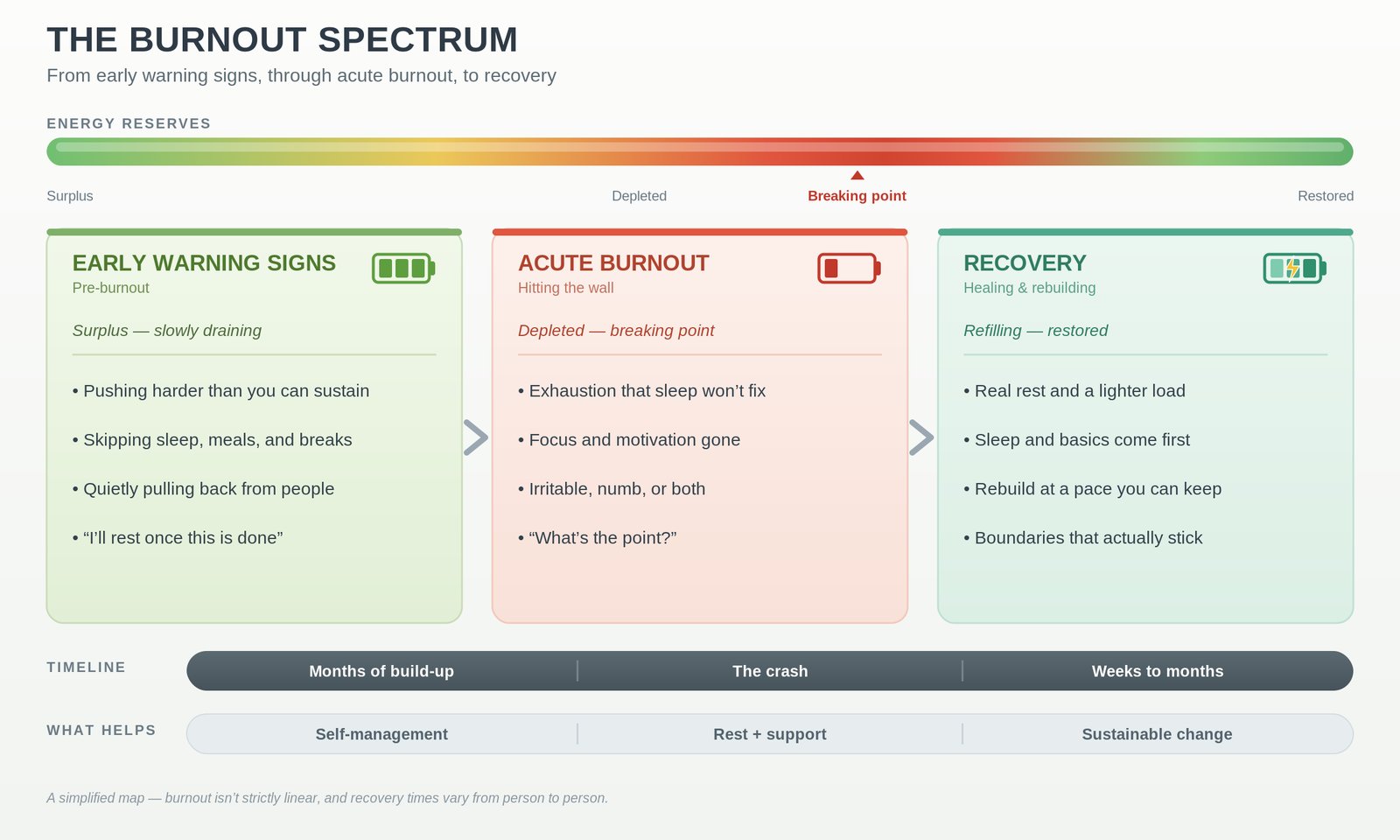
The cycle typically looks like this: You operate above your actual capacity for weeks, months, or years because you're overcompensating. Your adrenaline, urgency, novelty-seeking, and sheer determination carry you further than you should probably go. Then, gradually or suddenly, your nervous system hits a wall. That wall is burnout.
Once burnout sets in, the cycle deepens. Now you're exhausted, so executive function tanks even further. Tasks become harder. Decisions feel impossible. Instead of rest, you might push harder (because ADHD brains often respond to crisis with urgency), which deepens the exhaustion. Or you might swing the other direction—total shutdown, where nothing gets done, which triggers shame and anxiety, which makes rest feel impossible. That's the cycle: push too hard, crash, feel bad about crashing, push harder, crash deeper.
How long does ADHD burnout last? It depends on severity and your recovery approach, but most people experience acute burnout symptoms for weeks to months. Deeper recovery—rebuilding your relationship with work and rest, restructuring your systems—takes longer, typically several months to a year. This is why the recovery phase requires patience with yourself.
Recognizing the Signs Early
ADHD burnout symptoms often develop so gradually that you don't notice them until they're severe. Learning to recognize early warning signs can help you intervene before full burnout.
Look for these indicators: persistent fatigue despite adequate sleep, decreased ability to hyperfocus (that superpower feeling less available), decision paralysis even on small choices, increased forgetfulness or executive dysfunction beyond your normal baseline, emotional volatility or flatness, loss of pleasure in activities you usually enjoy, difficulty starting tasks even ones you like, and a pervasive sense of "what's the point?"
You might also notice physical signs: changes in sleep quality (not just quantity), tension that doesn't ease with your usual management, appetite changes, or an increase in stimming behaviors.
Recognizing these signs gives you a window of intervention. This is the moment to pause and ask: Am I operating at a pace I can actually sustain? What am I avoiding resting from? What would genuine recovery require?
The Role of Masking in ADHD Burnout
For many adults with ADHD—particularly women and those socialized as female—ADHD masking burnout is a significant factor. Masking is the practice of suppressing your natural ADHD traits and mimicking neurotypical behavior patterns. It's often necessary for survival in a neurotypical-designed world, but it's also exhausting.
When you're masking, you're essentially running two operating systems simultaneously. You're managing your actual ADHD executive function challenges while also performing neurotypical-like behavior. This is why many high-functioning adults with ADHD burn out despite appearing capable to others. The burnout isn't visible because they've become expert at hiding it.
ADHD masking burnout often includes a specific pattern: you appear fine at work or in social situations because you're mustering every ounce of executive energy for that performance. Then you get home and collapse entirely. You're too depleted for relationships, self-care, or household tasks. The mask comes off and the true cost becomes visible.
Recovering from masking burnout requires something different than general recovery. It involves gradually reducing the performance, giving yourself permission to be more visibly ADHD in contexts where it's safe, and restructuring your environment to require less masking overall.
This masking-driven exhaustion is what many people mean by neurodivergent burnout — and it shows up across ADHD, autism, and AuDHD alike.
How to Recover From ADHD Burnout: A Practical Pathway
Recovery from ADHD burnout isn't linear, and it's not about forcing yourself back to productivity. It's about genuinely rebuilding your capacity.
Start with rest, but define it clearly. For ADHD brains, rest can feel impossible or pointless. You might find yourself doom-scrolling for hours and calling it rest, or you might feel guilty for not being productive. True rest for ADHD burnout requires structure. Rest means stepping back from the demands that contributed to burnout, genuinely disengaging, and not replacing them with different productivity.
This might mean taking actual time off work, scaling back commitments, or radically simplifying your life for a season. It's temporary, but it needs to be real.
Reestablish a sustainable rhythm. Once you've rested, the temptation is to resume your old pace. Don't. Instead, rebuild at a pace you could honestly maintain forever. This is where tools like SteadyStation's ADHD-tuned Pomodoro sessions become invaluable. A sustainable work rhythm for ADHD minds often looks like 25 minutes of focused work followed by a genuine break—not checking your phone or jumping to another task, but actually stepping away. This rhythm prevents the feast-famine cycle that contributes to burnout.
Address sensory and environmental factors. ADHD burnout often includes sensory overload as both cause and symptom. Your threshold for stimulation drops significantly. This is an opportunity to audit your environment. What sounds, visuals, or sensations drain you? Can you reduce them? Creating a lower-stimulation environment during recovery is essential. Personalized tools that address sensory load—like SteadyStation's frequency mask that filters background noise—can help you function without that constant sensory tax.
Establish a sleep recovery protocol. Burnout disrupts sleep, and sleep disruption deepens burnout. This isn't just about more sleep; it's about quality. This might mean addressing screen time before bed, creating a genuine wind-down ritual, and giving your nervous system permission to decompensate in the evening. SteadyStation's wind-down soundscapes, designed for the transition from work to sleep, can help signal to your nervous system that recovery time has begun.
Examine your relationship with productivity. ADHD burnout is often rooted in an unsustainable productivity culture. You've internalized that your worth equals your output, or that rest is earned through productivity. Recovery involves interrogating this belief. What would it mean to be "worthy" while resting? What is enough?

Get support. This might be therapy, particularly trauma-informed or ADHD-specialist therapy. It might be coaching. It might be community with other ADHD folks who understand. It might be medical intervention if depression has developed alongside the burnout. Support makes recovery possible when it feels impossible alone.
ADHD Burnout Treatment: When to Seek Professional Help
Sometimes recovery requires more than rest and rhythm restructuring. This is where ADHD burnout treatment from a professional becomes important.
If your burnout has progressed to depressive symptoms that persist despite rest—hopelessness, inability to feel pleasure, thoughts of self-harm—you need professional mental health support. If you're struggling with substance use as a coping mechanism or if the burnout is affecting your safety or relationships severely, professional treatment is important.
There's also value in working with an ADHD coach or therapist specifically trained in ADHD, even if depression hasn't developed. They can help you restructure your systems, identify unsustainable patterns before they lead to future burnout, and rebuild your relationship with work and rest.
Some people also benefit from medication review during burnout recovery. Sometimes adjustments to ADHD medication, additional support for mood, or addressing sleep issues medically can accelerate recovery.
Preventing Re-Burnout: Building a Sustainable Future
The most important part of ADHD burnout recovery is preventing the cycle from repeating.
This requires honest awareness of your actual capacity—not your potential capacity, but what you can realistically sustain long-term. It means saying no more than you're comfortable with, delegating when possible, and building in recovery time as a non-negotiable part of your schedule, not something that happens if there's space left.
It means honoring your needs without waiting for crisis. If you notice your sleep degrading, address it immediately. If you feel the early signs of burnout creeping in, scale back before it becomes severe.
It also means recognizing that ADHD is variable. Some seasons are harder than others. Some years you'll have more capacity than others. Your sustainability threshold might be lower during high-stress periods, during certain times in your cycle if you menstruate, during major life changes, or when you're dealing with other health issues. Building flexibility into your expectations prevents shame when your capacity varies.

Moving Forward
ADHD burnout is a sign that something in your system is unsustainable. It's not a personal failing; it's feedback. Listening to that feedback and making real changes is the path forward.
Recovery won't restore you to baseline instantly. It's a gradual reclaiming of capacity, energy, and hope. Some days will feel better than others. You might discover that your baseline after recovery looks different—maybe more self-aware, maybe with better boundaries, maybe with a clearer sense of what actually matters to you.
The goal isn't to return to the pace that broke you. The goal is to build a life that works with your ADHD brain, not against it. A life where rest is part of the rhythm, not the reward for productivity. Where your capacity is respected, and where burnout isn't inevitable.
If you're in the thick of it right now—exhausted, depleted, wondering if things will ever feel normal again—know this: recovery is possible. You won't feel this way forever. The work is real, but so is the possibility of getting back to yourself.
Start where you are. If you can only rest today, rest. If you can only make one small change, make it something that protects your sleep or reduces stimulation. Small changes compound. Give yourself time. You deserve a life that doesn't require you to burn out to succeed.
Ready to find your focus?
Steady Station is a distraction-free soundscape and Pomodoro timer built for ADHD minds.
Try Steady Station for free →