How to Be Productive With ADHD: Systems, Tools, and Strategies That Actually Work
Stop fighting your ADHD brain. Discover practical systems, proven tools, and external structures that help adults with ADHD reclaim focus, manage tasks, and build sustainable productivity.
If you have ADHD, you've probably heard the advice: "Just make a to-do list" or "Try harder to focus." As if you haven't already tried both of those things—multiple times, in multiple formats, with various degrees of desperation. The truth is that traditional productivity advice often doesn't work for ADHD brains, not because you're failing, but because the systems themselves were designed by and for people with neurotypical executive function.
The good news? Learning how to be productive with ADHD isn't about willpower or discipline. It's about understanding how your brain actually works and building systems that complement it rather than fight against it. This isn't about becoming someone you're not—it's about creating the right infrastructure to let your brain do what it's capable of doing.
Understanding ADHD and Productivity: It's Not About Laziness
Before we talk about systems, let's acknowledge what's actually happening in the ADHD brain when productivity feels impossible. People with ADHD don't have a willpower deficit—they have a working memory constraint and irregular dopamine regulation. This means that tasks don't feel "real" or urgent until they're immediately in front of you, motivation is heavily tied to interest rather than importance, and distractions don't just compete for your attention; they can completely derail your working memory.
This isn't a character flaw. It's neurobiology. And once you understand that, you can stop blaming yourself and start building systems that actually address the real problem.
Effective ADHD productivity systems do three things: they externalize memory (so you don't have to hold everything in your head), they provide external motivation and structure (to compensate for inconsistent internal motivation), and they reduce decision fatigue in the moment (so you have mental energy left for actual work).
The productivity approaches that work best for ADHD don't rely on remembering to use them—they become part of your environment. They work with your brain's tendency toward hyperfocus and its need for novelty. And they acknowledge that some days will be better than others, without making you feel like a failure on the harder ones.
Task Management Systems: Finding What Actually Fits Your Brain
The traditional productivity market is saturated with systems designed for neurotypical brains — systems that assume you'll check your to-do list regularly, maintain consistent motivation across tasks, and stick to plans even when they're boring. These systems often fail spectacularly for adults with ADHD.
Instead, what works better is a task management approach that provides clear visibility of what exists, minimal friction to capture new tasks, and built-in flexibility. Many people with ADHD find success with simpler, more visual systems than the app-heavy approaches marketed to everyone.
The Getting Things Done method, created by David Allen, has resonated with many adults with ADHD precisely because it's designed around the idea of externalizing everything so your brain can stop holding onto task details. You capture everything, clarify what action is needed, organize it, and then review regularly. The system does the organizing; you just follow the structure.
Other people find that body doubling — working alongside someone else, either in person or virtually — transforms their task management experience entirely. When someone else is present or accountable, tasks suddenly feel more real. This is why many ADHD-focused coworking sessions, virtual study groups, and body doubling platforms have become invaluable. You're not getting a productivity boost from forcing yourself harder; you're getting it from the presence of another person recalibrating your brain's motivation system.
But here's where most task management systems still fall apart for ADHD brains: they separate the planning from the doing. You organize your tasks in one app, set a timer in another, find focus music in a third, and by the time you've set everything up, your activation window has closed. The friction between "knowing what to do" and "actually doing it" is where ADHD eats your day alive — and when that friction takes over completely, it becomes full task paralysis.
This is the problem SteadyStation was built to solve. Instead of spreading your workflow across multiple tools, everything lives in one place — a simple task list paired with a Pomodoro timer and a focus soundscape. You add a task, press go, and the environment shifts around you. No setup. No tab-switching. No decisions about which playlist to play or how long to set the timer for. The task list isn't separate from the focus session — it is the focus session. For an ADHD brain that loses momentum at every point of friction, that difference between three tools and one is often the difference between starting and staying stuck.
Time Management Strategies: Working With Your Natural Rhythms
Time blindness and inconsistent energy levels are hallmarks of ADHD, which makes traditional time management challenging. Blocking out time for tasks is great in theory, but it requires the kind of consistent forward planning that doesn't come naturally to many ADHD brains.
Time blocking still can work, but it needs to be adapted. Instead of planning every 30-minute block of your week, try time blocking at a larger grain: designate certain days or half-days for different types of tasks. Maybe Mondays and Wednesdays are for deep focus work, Tuesdays and Thursdays are for meetings and communication, and Fridays are for administrative tasks and planning. This gives structure without requiring you to predict your motivation levels perfectly.
The Pomodoro Technique — working in focused sprints with breaks between them — is another system many people with ADHD adapt rather than adopt wholesale. The standard 25-minute interval works for some people but not others. If you have ADHD, you might need shorter intervals (15 minutes of focus, 5-minute break) or longer ones (45 minutes, 15-minute break). The principle that matters is the timer, the interval, and the hard stop. The timer removes time blindness from the equation, and the hard stop gives you permission to take a break.
Some people with ADHD find that stacking or "time boxing" works better: assigning specific tasks to specific times rather than just blocking time for "work." "3 PM: respond to emails" is more concrete than "3-4 PM: catch up on communication." The specificity helps your brain engage because there's less decision-making required in the moment.
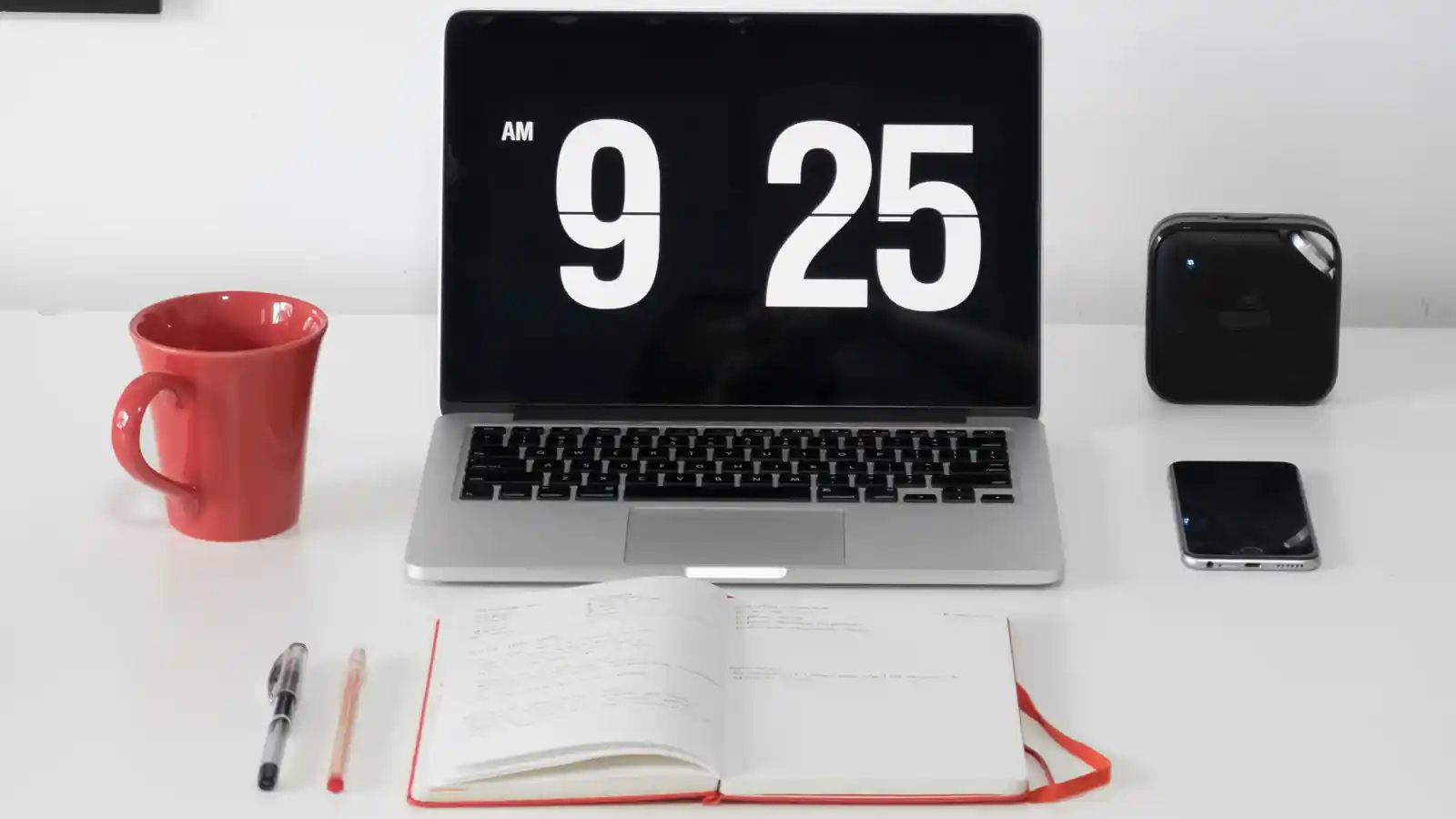
External time cues matter tremendously. If you work remotely, these might include scheduled coworking sessions, recurring video calls with accountability partners, or meetings that anchor your day. For some people, pairing a visual countdown timer with a consistent ambient soundscape — the approach SteadyStation takes — creates both the urgency and the sensory consistency their brain needs to stay locked in. The timer makes time visible; the sound makes the environment predictable. Together, they remove two of the biggest friction points for ADHD focus.
The Right Tools Can Be Transformational
Tools alone don't solve ADHD productivity problems, but the right tool can reduce friction dramatically. The key word is "right" — and for ADHD brains, that usually means the opposite of what the productivity market is selling. The ideal tool isn't the one with the most features. It's the one with the fewest decisions between you and doing the work.
Most productivity apps for ADHD are built for neurotypical brains that enjoy customizing dashboards, tweaking settings, and organizing systems. For an ADHD brain, every one of those options is a trapdoor. You open the app to start working and twenty minutes later you're reorganizing your tag system. The tool that was supposed to help you focus has become the distraction.
This is why SteadyStation takes the opposite approach. There are no settings to configure, no dashboards to build, no integrations to set up. You get three things: a focus soundscape that blocks distracting noise with a personalized frequency mask, a Pomodoro timer tuned for ADHD brains, and a simple task list. That's the entire product. You open it, pick a task, press go, and the environment shifts around you — sound, timer, and task working together in a single screen.
The simplicity is deliberate. Every feature that was left out was left out on purpose, because for ADHD brains, fewer choices means faster activation. You're not deciding which playlist to use, how long to set the timer for, or which of your three task apps to check. Those micro-decisions are gone. And when the friction between "I should work" and "I am working" shrinks to a single button press, starting stops being the hardest part of your day.
That said, no single tool works for everyone, and building a broader support system matters too. Body doubling — working alongside another person, either in person or through a virtual coworking session — has proven transformational for many adults with ADHD. The neuroscience is clear: the presence of another person, someone to check in with, someone you're gently accountable to, can compensate for weak internal motivation.
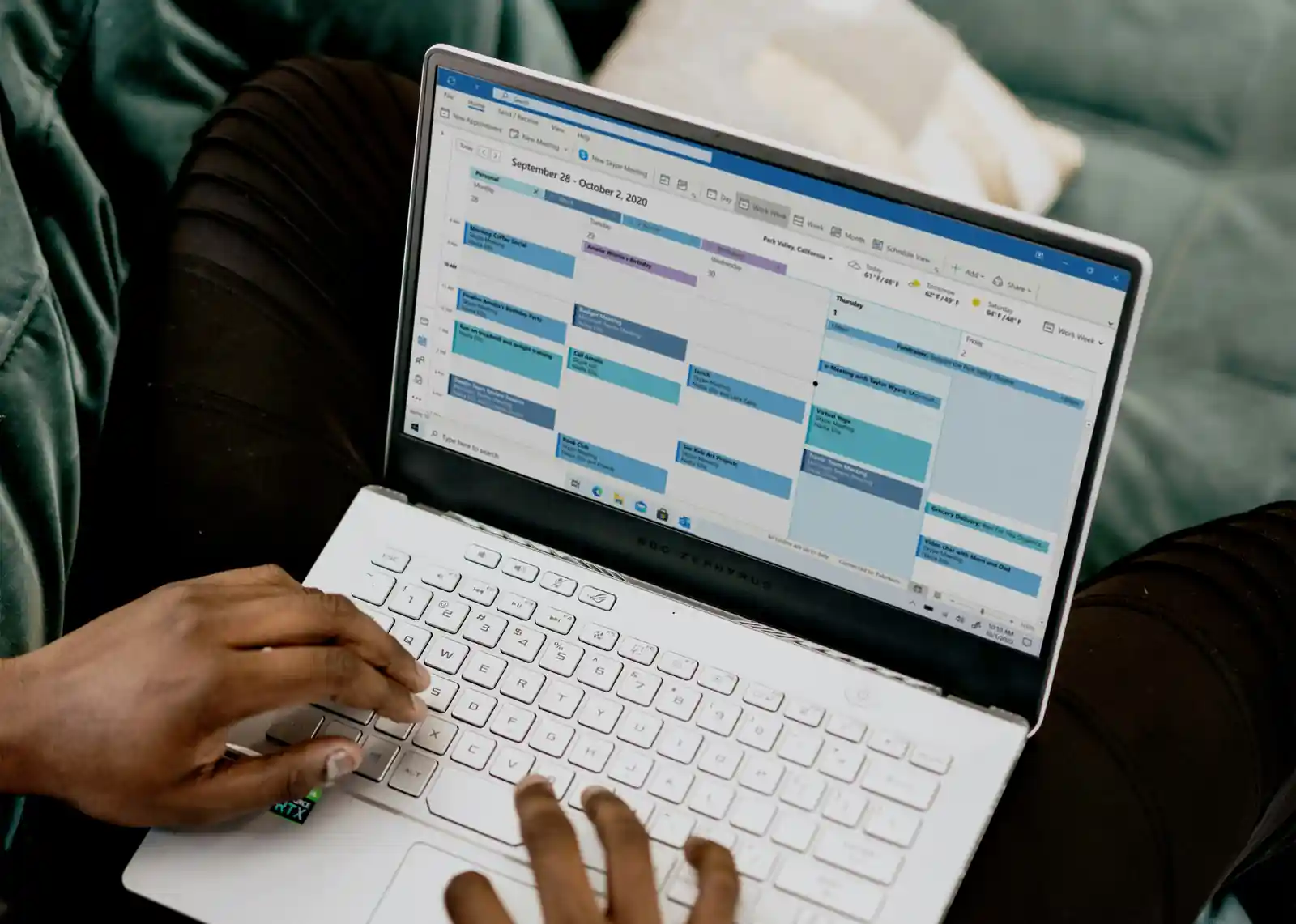
Whether that's a friend on a video call, an ADHD-focused coworking community, or a study group, the principle is the same — you're borrowing external structure to fill a gap your brain can't fill on its own.
The best tool stack for ADHD isn't the most powerful one. It's the one you'll actually use — because it's simple enough that your brain never gets a chance to stall before starting.
Building External Structure and Accountability
Internal motivation is unreliable for ADHD brains, which is why external structure becomes essential. This doesn't mean you're weak or dependent—it means you've identified how your brain actually works and built systems accordingly.
Accountability systems work because they create external motivation where internal motivation is inconsistent. This can take many forms: a weekly check-in with a therapist or ADHD coach, a recurring meeting with an accountability partner, a shared spreadsheet where you log completed tasks, or even just telling a friend what you plan to accomplish. The point isn't judgment; it's reality-testing. When you've told someone else what you're doing, that task becomes more real to you.
For many people with ADHD, having a professional in the picture—whether that's a therapist, ADHD coach, or career coach—transforms their entire relationship with productivity. A good coach doesn't push harder; they ask questions, help you notice patterns, and suggest experiments. They also normalize that your productivity won't be linear and that setbacks aren't failures.
Deadlines, similarly, become less of a punishment and more of a gift. If you have ADHD, you may have noticed that you do your best work right before a deadline. That's not a character flaw; that's your brain getting the dopamine surge it needs to engage. Rather than fighting this, you can work with it by creating intermediate deadlines and checkpoints that give you structure throughout a project rather than just at the end.
Environment Design: Making the Right Choice the Easy Choice
One of the most underrated aspects of ADHD productivity is physical environment design. Your environment should make the desired behavior easy and the undesired behavior hard—not through willpower, but through friction.
This might mean: keeping your phone in another room during focus time (removing the friction from ignoring notifications, rather than relying on willpower to resist them), using website blockers during work sessions, setting up your desk so the next task is literally in front of you, or creating a specific "focus corner" that signals to your brain that work happens here.
For remote workers, this is critical. Your brain doesn't distinguish between home-office and home-relax, which is why many people with ADHD find that even a small, dedicated workspace helps. It doesn't have to be fancy—a specific chair, a divider, a particular corner—just something that signals a mode switch.
Similarly, reducing visual clutter in your workspace actually frees up mental resources. You don't have to try harder to ignore fifteen things; you just remove them. An organized desk isn't about perfectionism; it's about reducing cognitive load.
These same environment tweaks are the foundation of how to stay focused with ADHD over a full workday — not willpower, but a space that removes friction.
Building a System That Evolves With You
The most important thing to understand about ADHD productivity is that it's not about finding the one system and sticking with it forever. Your needs will change. Medication status might change. Life circumstances shift. What works brilliantly for three months might stop working, and that's not failure—that's just how ADHD brains work.
The systems that last are the ones that include regular reflection and adjustment. This might be a monthly review where you ask yourself: Is this tool still working? Are my time blocks still realistic? Do I need more or less accountability right now? Is my environment supporting me or working against me?
Building a sustainable ADHD productivity system is also about self-compassion. You're not trying to become someone else. You're not trying to be neurotypical or fit into productivity frameworks designed for neurotypical brains. You're trying to work with the ADHD brain you have and create conditions where you can do your best work.
Some days will be low-energy ADHD days. Your system should be flexible enough to accommodate that without requiring a complete reset. Maybe you have a list of five-minute tasks for low-focus days, or a "minimum viable productivity" plan that just keeps you moving without demanding perfection.
Conclusion: Reframing Productivity for Your ADHD Brain
ADHD productivity doesn't look like neurotypical productivity, and that's okay. In fact, trying to force your ADHD brain into a neurotypical productivity mold is where most people get stuck. The systems that actually work are the ones that acknowledge how your brain is wired: your need for time-of-day structure, your variable motivation, your time blindness, and your capacity for hyperfocus.
Effective ADHD productivity systems externalize your working memory, provide external accountability and structure, reduce decision fatigue, and work with your brain's natural rhythms rather than against them. They're supported by tools that minimize friction, environments that make the right choice easy, and accountability structures that keep you on track.
The goal isn't perfection or maximal productivity. It's sustainable productivity—the ability to consistently move toward what matters to you, in a way that doesn't deplete you or require constant willpower. It's about using external systems to compensate for areas where your brain is different, not broken.
If you've been struggling with productivity, the issue probably isn't you. It's the system you've been trying to fit yourself into. Once you start building systems designed for how your brain actually works—with structure, visibility, external motivation, and compassion for the harder days—productivity stops being a constant battle and starts being something that actually works.
The most productive version of yourself isn't the one running on willpower and shame. It's the one with the right systems, tools, and external structures in place, finally working with your brain instead of against it.
Ready to find your focus?
Steady Station is a distraction-free soundscape and Pomodoro timer built for ADHD minds.
Try Steady Station for free →