ADHD Productivity Tips: Small Shifts That Make a Big Difference
Struggling with ADHD productivity? Discover small, sustainable habit shifts that work with your brain, not against it. Practical tips for real results.
If you've spent years listening to productivity advice designed for neurotypical brains, you've probably noticed something: it doesn't work. Or worse, it makes you feel broken for not being able to follow advice that's supposed to be "simple." The truth is, how to be productive with ADHD isn't about adopting the same systems everyone else uses—it's about understanding how your brain actually works and making small adjustments that feel sustainable rather than exhausting.
The promise of this article isn't a revolutionary system or a miracle tool — if you want the full systems-and-tools approach, start here. Instead, it's about micro-adjustments. The tiny shifts in behavior, environment, and mindset that create momentum without demanding superhuman willpower. These are changes that don't require overhauling your entire life, creating elaborate dashboards, or spending hours planning. They're about working with your ADHD brain instead of constantly fighting against it.
Understanding ADHD Productivity (It's Not What You Think)
Before we talk about solutions, let's address a fundamental misunderstanding: ADHD isn't a productivity problem. It's an executive function problem. There's a crucial difference.
When people talk about ADHD focus or ADHD motivation, they're often mixing up what's actually happening in the ADHD brain. You're not lacking motivation. You likely care deeply about your work and goals. What you're struggling with is initiation, sustained attention, working memory, and emotional regulation. These are challenges with the brain's ability to organize, prioritize, and shift between tasks—not challenges with caring or capability.
This distinction matters because it changes how you approach being productive. Instead of trying to motivate yourself harder (which rarely works and often backfires), you're removing friction from the things you want to do and adding structure where your brain needs it most.

The productivity tips you hear most often assume your biggest challenge is choosing what to work on or staying disciplined. But many people with ADHD know their biggest challenges are context-switching, task initiation, and the way your brain calculates time and urgency. Once you identify which executive functions trip you up most, you can design small shifts that work specifically for you.
Shift One: Reduce Friction at the Point of Entry
One of the most powerful ADHD productivity tips and hacks people overlook is this: make starting impossibly easy. Not just easy—so easy that the only thing standing between you and the task is literally opening it.
The amount of friction between "thinking about working on something" and "actually working on it" determines whether you'll do it. And when your brain struggles with task initiation (a core ADHD executive function challenge), friction is deadly.
Here's what this looks like in practice. If you need to write a report, the traditional advice is: plan out the structure, create an outline, set a time to work on it. But what actually happens for many people with ADHD? You think about it. You worry about it. You open a blank document. You close it. You think about it again. Days pass.
The micro-shift: instead of starting with a blank page, start with scraps. Open a document that's already half-full with notes, partial ideas, or even copied text you'll edit. Your brain perceives this as "continuing something" rather than "creating from nothing." The initiation problem shrinks dramatically.

The same principle applies to every task. If you want to take a walk, lay out your shoes and keys the night before so putting them on is the next logical step, not a separate decision. If you want to do laundry, put the basket near the washer so the next step is obvious. If you're working on a project, keep half-finished drafts visible on your desktop instead of filing them away perfectly.
This isn't laziness. It's working with your executive function challenges instead of pretending they don't exist. Every small reduction in friction—every shortcut, every pre-decision, every "easy next step"—compounds into real momentum.
Shift Two: Time Isn't Real (And That's Actually Information)
One of the stranger things about ADHD is how time works differently. You might lose four hours without noticing, or be convinced you have way more time than you actually do. This isn't a character flaw. It's called "time blindness," and it's a literal difference in how the ADHD brain processes temporal information.
The traditional productivity advice is: use timers, check the clock more often, plan better. But if your brain isn't wired to perceive time the same way, forcing yourself to look at a clock more won't fix the underlying issue. Instead, the shift is to externalize time — to make it something you can feel, not just something you're told to track.
One approach that works surprisingly well is tethering time to something sensory. Playing music with a known duration, for example — if you know a song is three minutes, and you've told yourself "I'll work until the next three songs are done," your brain has an actual timer tied to something it can feel. You experience the passage of time rather than just intellectually knowing it's passing.
Physical transitions help too. Instead of just closing one program and opening another, stand up, stretch, walk to get water, then sit down. That physical movement registers as "time has passed" in a way a mental switch doesn't. Your brain becomes more aware of what you did and when.
These strategies work because they make time concrete. And that's the same principle behind SteadyStation's Pomodoro sessions — a visible 25-minute countdown that turns formless time into something bounded, with a real break your brain can look forward to. You stop trying to feel time and start seeing it.

Time blocking still works for many people with ADHD, but only if you build in a margin. Instead of scheduling a task from 2-3 PM, schedule it from 1:30-3:30 PM. Your ADHD brain's time estimates are often off, and rather than shame yourself for not sticking to an impossible schedule, you're designing a schedule that works with how your brain actually functions.
Shift Three: Make Intention Visible
Here's something counterintuitive: your ADHD brain might actually prefer more structure, not less. Not the rigid, anxiety-inducing kind of structure, but the kind that makes your intentions impossible to ignore.
When you write something down or speak it aloud, you're externalizing intent. Your brain doesn't have to hold it in working memory anymore. It's out in the world. This is why lists work for some people with ADHD, but the traditional to-do list often doesn't. A standard to-do list has too many items, all competing for attention. Your brain can't prioritize them all, so you freeze or hyperfocus on one task for hours while everything else waits.
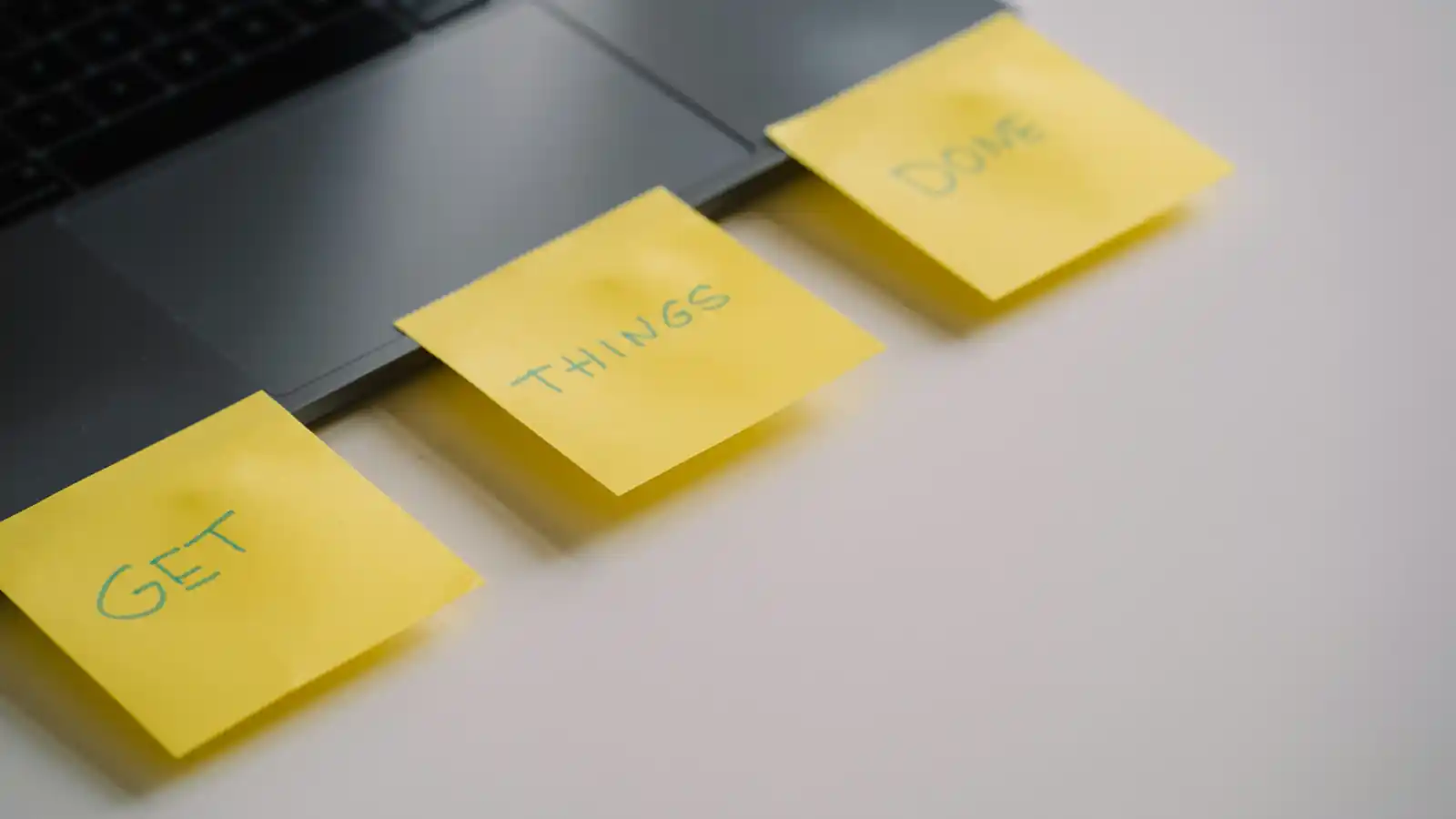
The small shift: instead of a master to-do list, choose three things each morning (or the night before) and write them somewhere visible. A sticky note on your monitor. A whiteboard by your coffee maker. A text message to yourself. Three things. Just three. Not because you'll only do three things today, but because your brain can hold three intentions without it feeling overwhelming.
Another micro-adjustment in this category: use a closing ritual that signals your brain the day is over. This could be closing a single notebook, shutting your laptop and turning it around, or saying "that's work for today" out loud. This sounds simple, but for people with ADHD whose brains struggle to shift into "off" mode, an external signal can be the difference between working until midnight and actually resting at a reasonable hour.
Intention visibility also includes environmental design. If you want to remember to take medication, put the bottle next to your coffee maker, not in the bathroom cabinet. If you want to drink more water, keep a water bottle on your desk where you see it constantly. You're not creating a permanent reminder; you're creating a constant, gentle signal of your intention.
Shift Four: Emotion Regulation Is a Productivity Lever
This one surprises people because they don't usually think of emotions as a productivity issue. But for people with ADHD, emotional regulation is deeply tied to executive function. When you're frustrated, overwhelmed, or dysregulated, your ability to initiate tasks, manage working memory, and stick with something drops dramatically.
The micro-shift here is recognizing that sometimes, the most productive thing you can do is regulate your nervous system first.
This doesn't mean meditation for 45 minutes or an elaborate self-care routine. It means simple, fast nervous system resets. A two-minute walk. Splashing cold water on your face. Listening to three minutes of music. Doing ten jumping jacks. These aren't distractions from productivity — they're the infrastructure that makes productivity possible.

Another emotional regulation shift: give yourself permission to work on something you're interested in, not just something you "should" do. The ADHD brain runs on interest, urgency, and dopamine. If you can't find interest or urgency in a task, you're fighting biology. So the question becomes: can you reframe the task to include something interesting? Can you work alongside someone? Can you change the environment where you work?
This is actually designing your work in a way that works with how your brain is wired. Forcing yourself to do boring work while fighting your own neurobiology creates shame, burnout, and reinforces the idea that you're broken.
Shift Five: Systems Are Great, But Start With One
When people search for ADHD productivity tips, they often land on elaborate systems: time blocking, task management apps, color-coded calendars, the Eisenhower Matrix, Getting Things Done, Notion dashboards. All of these can work. But the number of people with ADHD who set up an elaborate system and then abandon it after three weeks is... a lot.
The micro-shift: instead of building a complicated system all at once, start with one piece. Choose the thing your brain struggles with most. Maybe it's remembering tasks. Maybe it's knowing when something is due. Maybe it's losing track of time entirely. Fix that one thing first.
If remembering tasks is the problem, your system might be as simple as texting yourself the moment something comes to mind. That's it. That's the whole system. Your phone becomes your external brain. Later, if you need another piece, add it. But resist the urge to download three different apps and reorganize everything at once.
This is exactly why SteadyStation was built the way it was — deliberately simple, deliberately opinionated. There are no settings to tinker with, no dashboards to customize, no rabbit holes to fall into. You get a soundscape, a Pomodoro timer, and a task list. That's it. Not because more features weren't possible, but because every additional option is another place for an ADHD brain to stall. The lack of customization isn't a limitation — it's a design choice that respects how your brain actually works. You open it, you press go, and the environment does the rest.
This incremental approach to building systems works better than overhauling your entire productivity infrastructure at once because you're building something sustainable. Each piece integrates with how you actually live, not how you think you should live. And if the only piece you ever need is a sound, a timer, and a task — that's enough.
Shift Six: Rest Is Not Failure
Here's something you won't read in most productivity articles: for people with ADHD, rest is a critical part of how to be productive with ADHD. Not in a "treat yourself" way, but in a literal, neurological way.
The ADHD brain often experiences hyperfocus and then crashes. You work intensely for hours, then can't concentrate the next day. You push through fatigue and dysregulation, and then you're exhausted and struggling the day after. This isn't a sign you need more discipline. It's a sign you need to build rest into your system intentionally.
The small shift: instead of working until you crash, build in breaks before you need them. A 10-minute break every 25-30 minutes. A day where you deliberately do very little. An evening where work is off-limits. These aren't luxuries or distractions—they're maintenance.

When your system includes planned rest, you can actually work more consistently over time. You're not trying to push through fatigue constantly. You're working within a sustainable rhythm. And for ADHD brains that struggle with regulation, sustainable is better than intense-then-crashed every single time.
Bringing It Together: Your Personal Productivity Shift
The through-line in all of this is the same: how to be productive with ADHD isn't about doing more or pushing harder. It's about working with your brain's actual strengths and challenges instead of pretending you have a neurotypical executive function system.
Start by identifying which shift would help you most right now. Maybe it's reducing friction at the point of entry. Maybe it's making your intentions visible. Maybe it's giving yourself permission to regulate before diving into work. Pick one. Make that small change. Let it integrate into your life. Then, if you want, make another small change.

You don't need a revolutionary system. You don't need to become a different person. You don't need to suddenly have unlimited willpower or the ability to focus for eight hours straight. What you need are small, sustainable shifts that acknowledge how your brain actually works and remove barriers to doing the things that matter to you.
These tiny adjustments—externalized time, visible intentions, reduced friction, nervous system regulation, incremental systems, planned rest—they don't fix ADHD. That's not the point. The point is they make living with ADHD a lot easier. They make productivity feel possible instead of like something you're constantly failing at. And that's where real, sustainable change begins.
Conclusion: Progress Over Perfection
The ADHD productivity journey isn't a destination. It's not about reaching some perfect system where you're optimized and efficient and never struggle again. That's not real, and especially not real for ADHD brains. The goal is simpler: it's about making progress. It's about designing a life that works with how you're wired, not against it.
Every small shift you make—removing one piece of friction, making your intentions visible, giving yourself permission to rest—is you learning how your brain works and honoring that. That's worth something. That's worth a lot, actually.
Start small. Be patient with yourself. And remember: you're not broken. You're just working with different parameters than the productivity advice you've been reading assumes. Once you start designing for those parameters instead of fighting them, things shift. Not overnight. But gradually. Sustainably. Actually.
That's what real ADHD productivity looks like.
Ready to find your focus?
Steady Station is a distraction-free soundscape and Pomodoro timer built for ADHD minds.
Try Steady Station for free →