
How to Start a Task When Your ADHD Brain Won't Let You
Can't start tasks with ADHD? It's not laziness — it's a neurological freeze. Learn 9 science-backed strategies to break task paralysis and get moving again.
You've been staring at the screen for forty-five minutes. The task isn't hard. You know what to do. You might even have the whole thing planned out in your head. But your hands won't move. Your brain won't engage. It's as if someone disconnected the wire between thinking and doing — and no amount of willpower can plug it back in.
This isn't procrastination. This is task paralysis. And if you have ADHD, it might be the most frustrating part of your entire day.
The gap between intention and action is where ADHD does its most invisible damage. From the outside, it looks like you're choosing not to start. From the inside, it feels like being trapped behind glass — you can see exactly what needs to happen, but you physically cannot reach it. Understanding why this happens is the first step toward building a way around it.
The Wire Is Real (And It's Neurological)
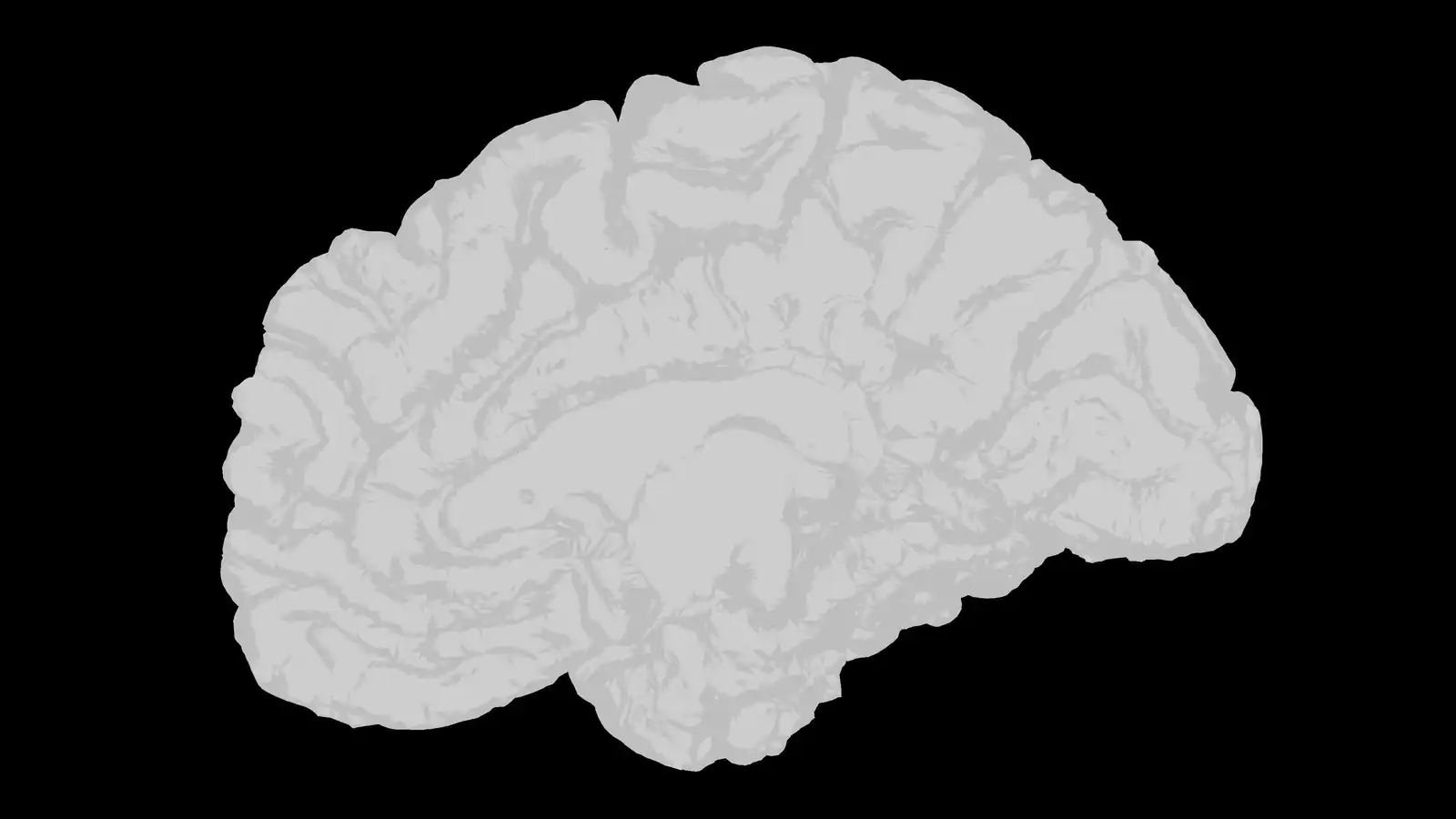
Task initiation — the brain's ability to begin an action without external force — is a core executive function. It's governed by the prefrontal cortex, the same region responsible for planning, decision-making, and working memory. And in ADHD brains, this region works differently.
Research published by the National Institutes of Health has shown that ADHD is associated with weaker function and structure in prefrontal cortex circuits, particularly in the right hemisphere. The prefrontal cortex in people with ADHD matures more slowly, is slightly smaller in volume, and operates with disrupted dopamine and norepinephrine signalling. These two neurotransmitters are essential for the prefrontal cortex to do its job — and when they're not at optimal levels, executive functions like task initiation suffer first.
Here's what that means in practical terms: your prefrontal cortex needs a certain threshold of neurochemical activation to initiate a behaviour. For neurotypical brains, a thought like "I should start that report" generates enough dopamine to cross that threshold. For ADHD brains, that same thought barely registers. The signal is too weak. The engine doesn't turn over.
This is compounded by issues with the default mode network — the brain system that handles mind-wandering and internal thought. In ADHD, the default mode network stays abnormally active during tasks that require focused attention. So not only does your brain struggle to start the task, it's actively pulling you toward daydreaming, rumination, and mental tangents. You're fighting on two fronts simultaneously.
None of this is a choice. It's architecture.
It's Not Procrastination — It's a Freeze Response
This distinction matters enormously, because the solution for procrastination doesn't work for task paralysis.
Procrastination is a conscious decision to delay. You know you should work on the presentation, but Netflix sounds better, so you choose Netflix. There's agency in that decision, even if it's not a great one.
Task paralysis is involuntary. It's the result of an overloaded executive system that can't sequence, prioritise, or activate. As the Cleveland Clinic describes it, ADHD paralysis occurs when someone is overloaded with information, tasks, or decisions — and the brain's response is to shut down entirely. People with ADHD are more prone to this biological freeze response, which is the nervous system's way of protecting itself from overwhelm.
The freeze can look different depending on the situation. Sometimes it's mental paralysis — you can't decide which task to start, so you start none of them. Sometimes it's task paralysis — you know exactly what to do but your body won't cooperate. And sometimes it's an emotional freeze, where the feelings surrounding the task (dread, shame, fear of failure) become so heavy that they block all forward movement.
That emotional layer is worth unpacking, because it's often the hidden driver of the worst freezes.
The Emotional Wall in Front of Every Task
Here's something that doesn't get talked about enough: for many people with ADHD, the hardest part of starting a task isn't cognitive. It's emotional.
Every unfinished task carries a history. Maybe it's the report you were supposed to submit last week. Maybe it's the email you've been avoiding for days. Each time you think about it and fail to start, a layer of shame gets added. And shame, as research from Psychology Today and ADDitude Magazine consistently shows, is one of the most pervasive emotional experiences in ADHD.
Shame fuels perfectionism — the unconscious belief that if you do something perfectly, you can avoid the pain of criticism or failure. And perfectionism fuels avoidance, because if you can't guarantee a perfect outcome, it feels safer not to begin at all. The result is a vicious cycle: avoid the task, feel shame about avoiding it, accumulate more emotional weight, which makes the task even harder to start next time.

This is why the standard advice of "just start" is so maddening. It ignores the emotional architecture that makes starting feel genuinely dangerous to your nervous system. Your brain isn't being lazy. It's protecting you from a perceived threat — even when that threat is a spreadsheet.
Breaking this cycle requires strategies that address both the neurological barrier and the emotional one.
Nine ADHD Task Initiation Strategies to Get Past the Starting Line
These strategies are how to start a task with ADHD when your brain won't cooperate — designed for how task initiation actually works. They're not about discipline or willpower. They're about lowering the activation energy — the minimum amount of effort required to begin — until your brain can cross the threshold.
1. Shrink the Task Until It's Almost Absurd
Your brain stalls on big, ambiguous tasks. "Write the report" is paralysing because it contains dozens of invisible sub-steps. "Open the document and type one sentence" is so small it barely registers as effort.
This isn't a trick — it's neuroscience. Micro-steps reduce the perceived threat of the task, which lowers the emotional barrier. They also generate a small dopamine hit on completion, which can build enough momentum to carry you into the next step. The goal isn't to finish. The goal is to move. Once you're moving, the ADHD brain often keeps going.
2. Name the First Physical Action
Task initiation breaks down at the transition from thought to physical movement. You can short-circuit this by making the first step absurdly concrete and physical.
Not "work on the project." Instead: "open laptop, click Chrome, type Google Docs in the address bar." Not "clean the kitchen." Instead: "walk to the sink, pick up one plate." When the instruction is physical and specific, it bypasses the prefrontal cortex's need to plan and sequence — which is exactly where ADHD brains get stuck.
3. Use a Timer to Create a Container
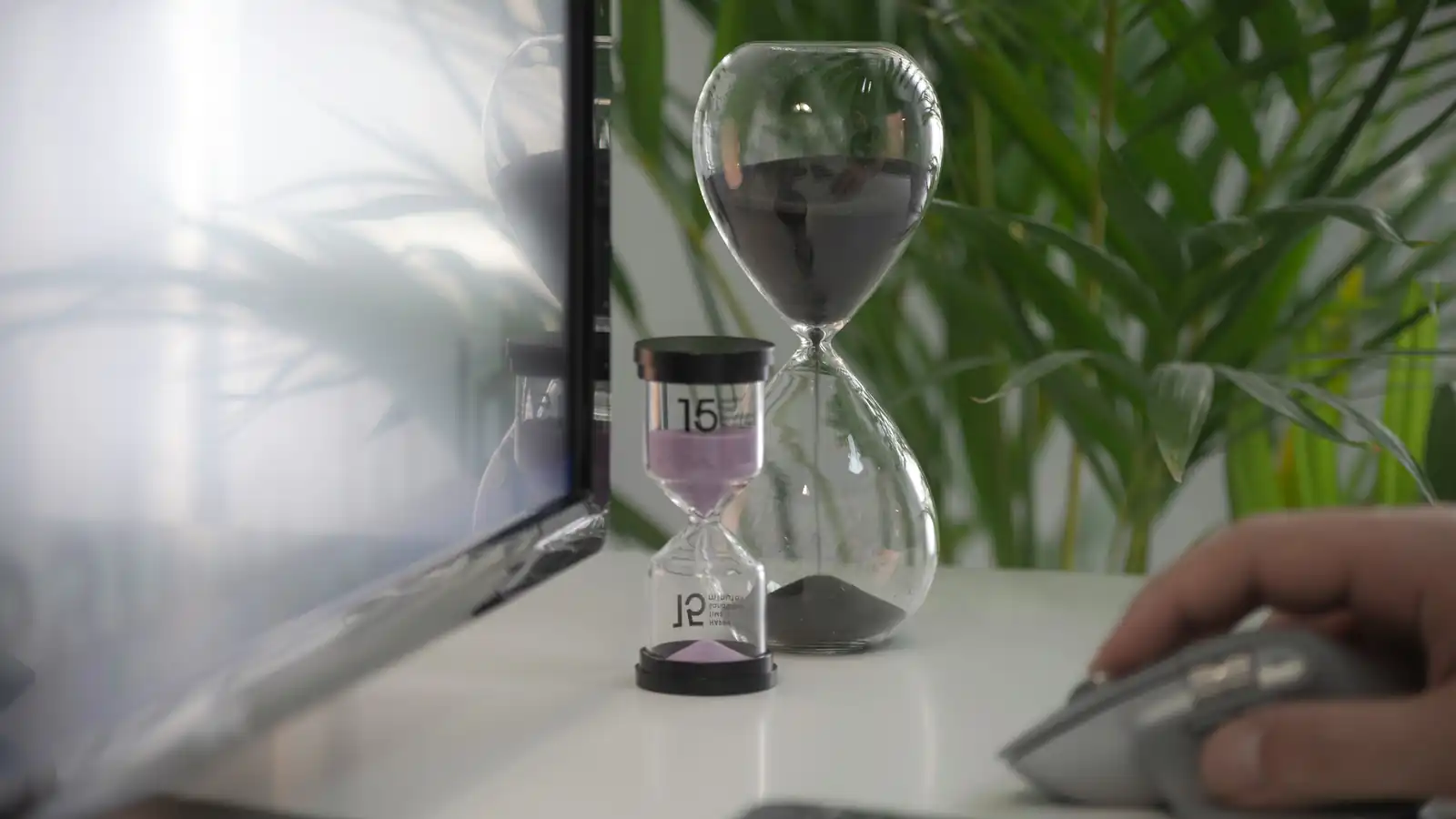
One of the cruelest features of ADHD is time blindness — the genuine inability to feel time passing or estimate how long things take. Without a felt sense of time, every task feels infinite. And infinite tasks are impossible to start. A visible, ticking timer solves this. It transforms an abstract, open-ended task into a finite, bounded commitment. "Work on this for 15 minutes" feels completely different from "work on this until it's done." The Pomodoro Technique formalises this approach — short work intervals followed by mandatory breaks — and it's particularly effective for ADHD because it creates the external structure that the brain can't generate internally.
SteadyStation was designed around this idea — its ADHD-tuned Pomodoro sessions give you a visible countdown paired with a focus soundscape, so the act of starting a timer also creates the sensory environment for deep work. No setup, no decisions. Just press go.
ADHD coaches often recommend starting with intervals as short as 10 minutes. The point isn't to build endurance. It's to make starting feel safe.
4. Build a Dopamine Bridge
Your brain won't start a low-dopamine task on its own. So pair it with something that generates dopamine.
This is called task pairing, and it works because the ADHD brain processes motivation through interest and sensory engagement, not obligation. Put on a focus soundscape while you work. Drink your favourite coffee only during work sessions. Light a specific candle that signals "focus time." These sensory anchors don't just make the task more pleasant — they create a Pavlovian association between the stimulus and the state of focus.
Over time, the soundscape or the coffee becomes a cue that tells your brain: "This is the part where we work." The environmental signal does what willpower cannot.
5. Externalise Your Working Memory
If you're trying to hold the task, the steps, the deadline, and your emotional response to all of it inside your head, your working memory will overflow. And when working memory overflows in ADHD, the system crashes — which looks a lot like staring at the wall for an hour.
Get everything out of your head and into something visible. A short task list — not a 47-item project plan, but three things maximum — tied to the current focus session. The goal is to make the decision about what to do before the moment of starting, so that when it's time to begin, there's no decision left. Just action.
6. Use Body Doubling
Body doubling is the practice of working alongside another person — in the same room, on a video call, or through a virtual co-working session. It sounds too simple to matter, but for many people with ADHD, it's the single most effective strategy for breaking task paralysis.
The presence of another person creates a gentle form of external accountability. Not pressure — just enough social signal to tip the brain past its activation threshold. Researchers believe it works by externalising the self-regulation function that ADHD brains struggle to perform internally. You're borrowing someone else's nervous system regulation to kickstart your own.

7. Break the Shame Loop
If a task has accumulated emotional weight — days of avoidance, layers of guilt — the emotional barrier may be higher than the cognitive one. In that case, no productivity hack will work until you address the feeling first.
Try this: before starting, acknowledge the emotion out loud. "I've been avoiding this and I feel terrible about it. That's making it harder to begin." This simple act of naming the feeling reduces its power — a process psychologists call "affect labelling." Research shows that putting emotions into words decreases amygdala activation, which is exactly the brain region that's telling you to freeze.
You don't need to resolve the shame. You just need to reduce its volume enough to take one step.
8. Change Your Physical State First
Sometimes the freeze is so deep that no mental strategy can reach it. When that happens, change your body first. Stand up. Walk to a different room. Do ten jumping jacks. Splash cold water on your face. Take three deep breaths.
This works because physical movement activates the sympathetic nervous system and increases blood flow to the prefrontal cortex. It's a neurological reset — shifting your body out of the freeze state and into a state where activation becomes possible again. You're not trying to motivate yourself. You're trying to unfreeze yourself. The motivation comes after.
9. Create a Pre-Focus Ritual
The most sustainable solution isn't any single strategy — it's a minimal, repeatable sequence that becomes automatic over time.
For example: sit down, open your task list, choose one item, put on your soundscape, start the timer. Five steps. No decisions. No optimising. No choosing between twelve productivity apps. The ritual works because it removes the cognitive load from the moment of starting. When the steps are the same every time, your brain can run them on autopilot — which means the prefrontal cortex doesn't have to engage until you're already in motion.
The best focus tools for ADHD are built around this principle: a simple, opinionated workflow that eliminates choice at the point of activation. A soundscape to signal focus. A timer to make time visible. A task list to remove the "what should I do" question. Nothing else. No rabbit holes. No settings to tinker with. Just the minimal structure your brain needs to begin.
You Were Never the Problem
If you've spent years believing that your inability to start tasks is a personal failing — that you're lazy, undisciplined, or somehow less capable than everyone around you — I want to leave you with this: the research shows, clearly and repeatedly, that task initiation difficulty in ADHD is neurological. It's structural. It's measurable on brain scans.
You are not choosing to freeze. Your nervous system is responding to a combination of reduced dopamine signalling, prefrontal cortex differences, working memory limitations, and emotional weight. Every single one of those factors has a workaround — not through willpower, but through environment design, external structure, and tools that meet your brain where it actually is.
The task hasn't changed. But the way you approach it can.
Start smaller than you think is reasonable. Make time visible. Let sound signal focus. Remove every decision you can. And remember: the hardest part is the first ten seconds. Everything after that is momentum.
Ready to find your focus?
Steady Station is a distraction-free soundscape and Pomodoro timer built for ADHD minds.
Try Steady Station for free →