
How to Get Motivated With ADHD When Everything Feels Impossible
ADHD motivation isn't about willpower — it's about activation. Learn why your brain stalls and 7 science-backed strategies to start when everything feels impossible.
The task is simple. You know exactly what needs to happen. You even care about the outcome. And yet — you're frozen. Your body won't move. Your brain won't engage. It's not that you don't want to do it. It's that something between wanting and doing is completely broken.
If you have ADHD, this isn't a character flaw. It's a neurological bottleneck — and it has a name.
That feeling of being stuck despite desperately wanting to move forward is one of the most misunderstood experiences of living with ADHD. Friends and family call it laziness. Productivity culture calls it a discipline problem. You might even call it that yourself, after years of hearing the same message. But the neuroscience tells a completely different story — one that, once you understand it, changes how you approach motivation entirely.
Why Your Brain Won't Start (It's Not What You Think)
Let's get the most important thing out of the way: the motivation problem in ADHD isn't psychological. It's structural.
Research published in Molecular Psychiatry used PET brain imaging to show that people with ADHD have measurably lower levels of dopamine receptors and transporters in the nucleus accumbens and midbrain — the two regions most directly responsible for processing motivation and reward. The study found that these reductions in the dopamine reward pathway were directly correlated with scores on motivation measures. In plain terms: your brain's reward system is literally wired differently. The internal "ignition switch" that neurotypical brains use to start a task simply doesn't fire as reliably in an ADHD brain.
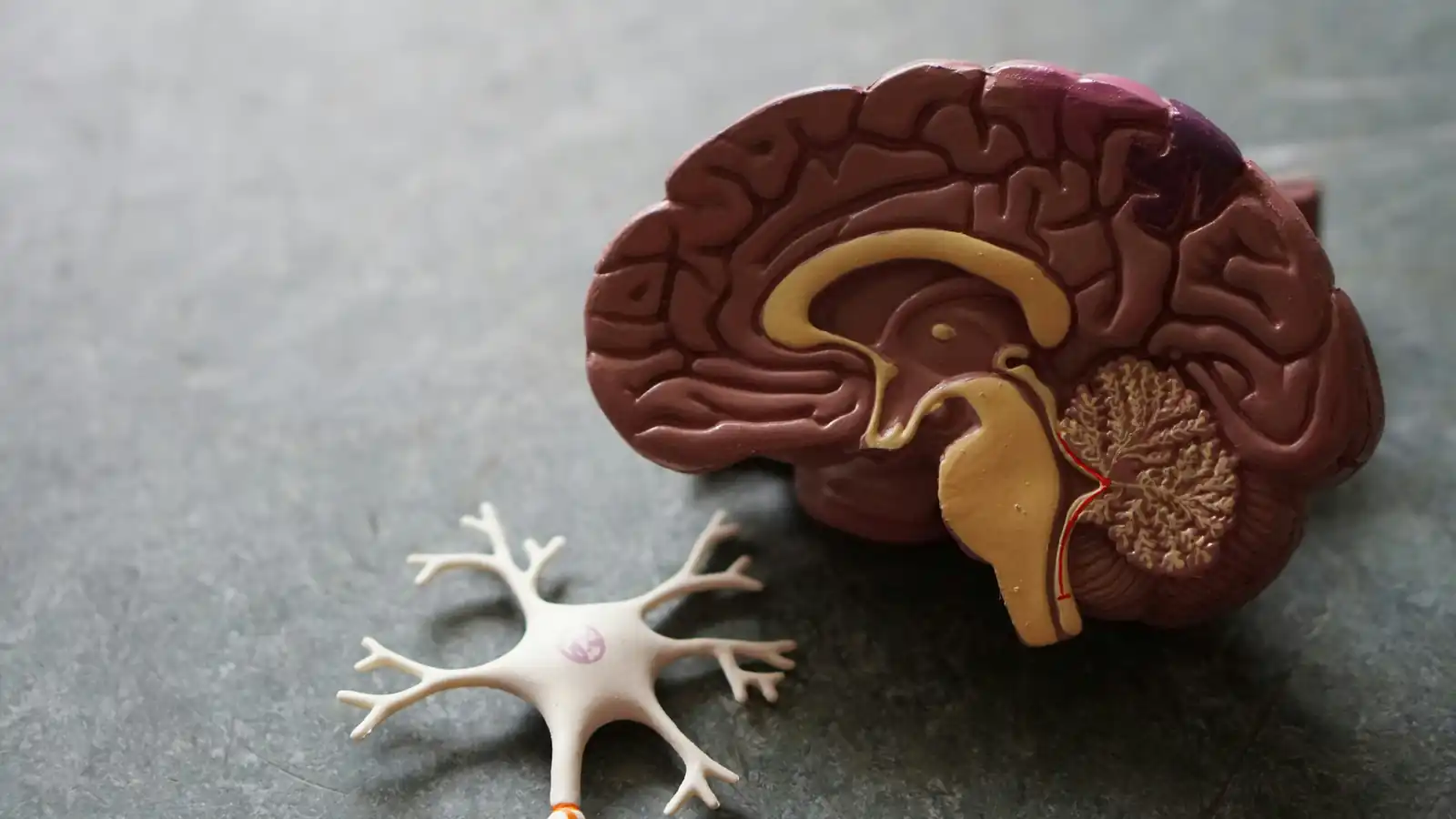
This matters because most productivity advice — "just start," "think about the consequences," "remember your goals" — is built on the assumption that your brain can generate motivation from importance. For neurotypical brains, this works. Something is important, therefore the brain releases enough dopamine to begin. But ADHD brains don't run on importance. They run on interest.
Dr. William Dodson, a psychiatrist who has spent decades specialising in ADHD, calls this the "interest-based nervous system." He poses a simple question to his patients: "If you could get engaged and stay engaged, has there ever been anything you couldn't do?" The answer, almost universally, is no. The capability is there. The problem is activation.
This reframe is critical: you don't have a motivation deficit. You have an activation deficit. The engine is powerful — it just needs a different key.
Task Paralysis Is Not Procrastination
There's an important distinction that most people — including many mental health professionals — still get wrong. What ADHD looks like from the outside is procrastination: the deliberate delay of a task in favour of something more pleasant. But what's actually happening inside is fundamentally different.
Task paralysis is an executive function failure. It's the breakdown of the brain's ability to translate intention into action. You're not choosing to avoid the task. You're not scrolling your phone because it's more fun. You're frozen because the neural pathway between "I need to do this" and "my body is doing this" has stalled.
Dr. Russell Barkley, one of the leading researchers in ADHD, describes this as a deficit in self-regulation — the brain's capacity to direct behaviour toward a future goal without external prompts. Working memory, emotional regulation, and time perception all feed into task initiation, and all three are compromised in ADHD.
There's also a time component that makes this worse. Many people with ADHD experience what researchers call "time agnosia" — a genuine difficulty feeling the passage of time. Without an internal sense of when things need to happen, tasks feel abstract and unanchored. There's no felt urgency until the deadline is minutes away, and then suddenly everything happens at once in a frantic burst. Sound familiar?
The guilt that follows these cycles is enormous. You know you should have started earlier. You know the panic wasn't necessary. But understanding why your brain works this way is the first step toward building systems that actually help.

What Actually Drives an ADHD Brain
If importance doesn't work, what does? Dr. Dodson's framework identifies four core motivators that reliably activate ADHD brains. They're sometimes remembered by the acronym PINCH:
Passion and Play. When something genuinely excites you, activation is effortless. This is why the same person who can't start a work email can hyperfocus on a creative project for eight hours straight. The brain isn't broken — the fuel source is different.
Interest. Novel, curious, or intellectually stimulating tasks get immediate engagement. The ADHD brain is drawn to what's fascinating, not what's scheduled.
Novelty. New things generate dopamine. The first day of a new system, a new project, a new app — everything feels possible. The challenge is sustaining engagement after novelty fades.
Challenge and Competition. An element of difficulty, a race against the clock, or a friendly competition can trigger the focus that importance alone cannot. This is why some people with ADHD thrive under pressure but crumble with easy, routine tasks.
Understanding your personal activation triggers is like learning the language your brain actually speaks. Once you know it, you can start engineering your environment to speak it back to you.

ADHD Motivation Tips: Seven Strategies That Work With Your Brain
Here's where this gets practical. These aren't generic productivity tips. They're strategies designed specifically for how ADHD motivation actually works.
1. The Two-Minute Launch
Don't commit to finishing. Commit to starting for two minutes. That's it. This works because the hardest part of ADHD task initiation is the moment of activation — not the task itself. By reducing the commitment to something absurdly small, you lower the activation energy enough for your brain to engage. Once you're in motion, you'll often keep going. And if you don't? You still did two minutes more than zero.
2. Make the Task Smaller Than Your Resistance
If "clean the kitchen" feels impossible, it's too big. Try "put three dishes in the dishwasher." If "write the report" is paralysing, try "open the document and type one sentence." The ADHD brain is not intimidated by difficulty — it's intimidated by ambiguity and scale. When a task has no clear starting point and no visible end, it registers as a threat. Shrink it until it feels almost silly, then do the silly thing.
3. Use External Time Pressure
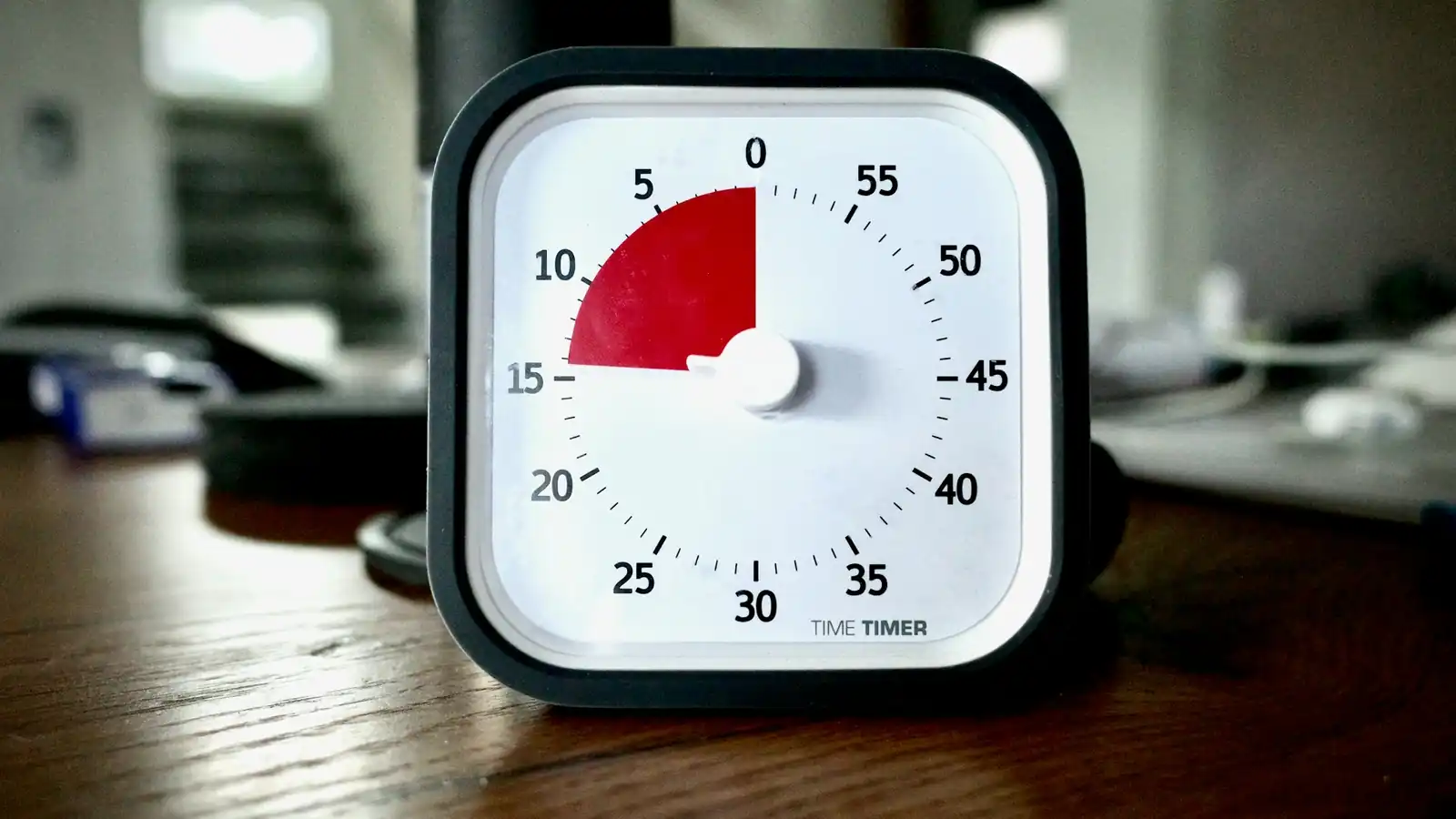
Your brain may not generate internal urgency, but it responds powerfully to external structure. A timer running on your screen makes time visible and tangible — something your brain genuinely struggles to do on its own.
The Pomodoro Technique is built around this principle: set a timer for a focused interval, work until it rings, then take a short break. For ADHD brains, the timer does what your internal clock can't — it creates a boundary around time that makes the task feel finite and manageable.
Research from the ADHD Coaches Organisation suggests starting with shorter intervals of 10 to 15 minutes rather than the traditional 25, especially when you're building the habit. The point isn't endurance. It's activation.
4. Add Sound to Signal Focus Mode
This one is underrated. Your environment sends constant signals to your brain about what it should be doing. A quiet, chaotic room says "there's nothing urgent happening." A steady ambient soundscape says "focus is happening now."
Ambient noise — particularly brown noise or curated focus soundscapes — creates a consistent auditory environment that helps the ADHD brain filter out unpredictable distractions. Some people get a similar cueing effect from binaural beats, which use two slightly different tones to nudge the brain toward a focus state. It also acts as a behavioural cue: when the sound is on, it's work time. Over time, your brain learns the association, and the soundscape itself becomes an activation trigger.
This is fundamentally different from putting on a random playlist and hoping for the best. Music with lyrics, changing tempos, or algorithm-driven shuffling introduces novelty and choice — exactly the kind of stimulation that pulls an ADHD brain away from the task. SteadyStation's soundscapes are designed to do the opposite: predictable, non-distracting audio that fills the background without competing for your attention.
5. Pair Tasks With Visible Rewards
The ADHD reward system needs rewards to be immediate and tangible — not abstract future outcomes. "This will help your career" is not motivating. "After this timer ends, I get coffee" is.
Build micro-rewards directly into your work sessions — a simple reward system for ADHD adults. A physical checklist you can cross off. A treat after completing a focus block. A five-minute break to do something you actually enjoy. These aren't childish — they're compensating for a dopamine system that doesn't generate its own reward signal for mundane tasks. You're not bribing yourself. You're giving your brain the feedback loop it's missing.
6. Use Body Doubling
Body doubling is the simple act of working alongside another person — in the same room, on a video call, or even through a virtual co-working platform. It sounds too simple to work, but for many people with ADHD, it's transformative.
The presence of another person creates just enough external accountability to tip the brain past its activation threshold. You're not being watched or judged. You're simply not alone, and for some reason, that's enough. Researchers believe it works by externalising the motivation that the ADHD brain can't reliably generate internally.

7. Build a Pre-Focus Ritual (Not a System)
Big, complex productivity systems collapse under ADHD. They work for three days, then become another source of guilt. What works better is a minimal, repeatable ritual that signals the transition into focus mode.
This could be as simple as: open your task list, pick one thing, put on your soundscape, start the timer. Four actions. No decisions about what tool to use, what method to follow, or how to organise your day. The entire point is to remove decisions from the moment of activation, because every decision is a point where your brain can stall.
The most effective focus tools for ADHD are opinionated by design. They strip away the choices that stall your brain and give you just enough structure to start. SteadyStation was built around this idea — a soundscape, a timer, and a task. Nothing to configure, nothing to decide. That lack of choice isn't a limitation. It's what makes it work.
The Motivation Myth
Here's the truth that changed everything for me: motivation is not a prerequisite for action. It's a byproduct of it.
Neurotypical brains can sometimes generate motivation before starting — a feeling of readiness, a spark of energy, a sense that now is the right time. ADHD brains almost never do. If you wait to "feel motivated," you'll wait forever.
But once you start — even badly, even for two minutes, even just the smallest fragment of the task — dopamine begins to flow. Momentum builds. The fog lifts. And suddenly the task that felt impossible ten minutes ago feels completely manageable.
Every strategy in this article points to the same core principle: don't try to fix your motivation. Fix your activation. Lower the barrier to starting. Make time visible. Remove choices. Let the environment do the work your brain chemistry won't.
You've never had a motivation problem. You've had a starting problem. And starting problems have solutions.
Ready to find your focus?
Steady Station is a distraction-free soundscape and Pomodoro timer built for ADHD minds.
Try Steady Station for free →