
Mindfulness Exercises for ADHD: Techniques That Actually Stick
Practical mindfulness exercises built for busy minds — movement, sensory anchors, and tiny daily doses that actually stick when your brain won't sit still.
You sit down to meditate. Focus on your breath, they said. Within about thirty seconds you're planning dinner, replaying an awkward conversation from years ago, and wondering if you paid that bill. Three minutes feels like forever, and you decide, again, that mindfulness "just isn't for you."
Here's the reframe: the sit-still-and-empty-your-mind version was never the only version — and it's the worst possible fit for a busy, restless mind. Mindfulness isn't about achieving perfect stillness. It's about noticing where your attention is, in small doses, in a way that actually fits how your brain works. The exercises below do exactly that. Pick one, keep it short, and let it be imperfect. (If you first want the evidence on whether mindfulness helps at all, that's covered in does mindfulness actually work for ADHD.)
Why the Usual Version Doesn't Fit
Being told to sit quietly for twenty minutes and ignore your thoughts asks a restless brain to do the one thing it's worst at. You hit a wall around the three-minute mark, get frustrated, and end up teaching yourself that mindfulness is one more thing you "fail" at. That's not a character flaw — it's just a mismatch between the instructions and your wiring.
The fix isn't willpower. It's changing the format so the practice works with your tendencies instead of against them:
- Go shorter. Two to five minutes, not twenty. You can stretch it later if you want to.
- Add engagement. Give your hands or your senses something to do while you practise.
- Allow movement. Walking, stretching, and fidgeting all count — you don't have to sit still.
- Keep it novel. Rotate between techniques so it doesn't get stale and boring.
- Lean on structure. Timers, guided audio, or a set trigger point anchor the habit so you're not relying on memory or motivation.
Stop fighting the restlessness and mindfulness becomes something you can actually keep up. And with a busy brain, consistency matters far more than how long any single session lasts.
Move Instead of Sitting Still
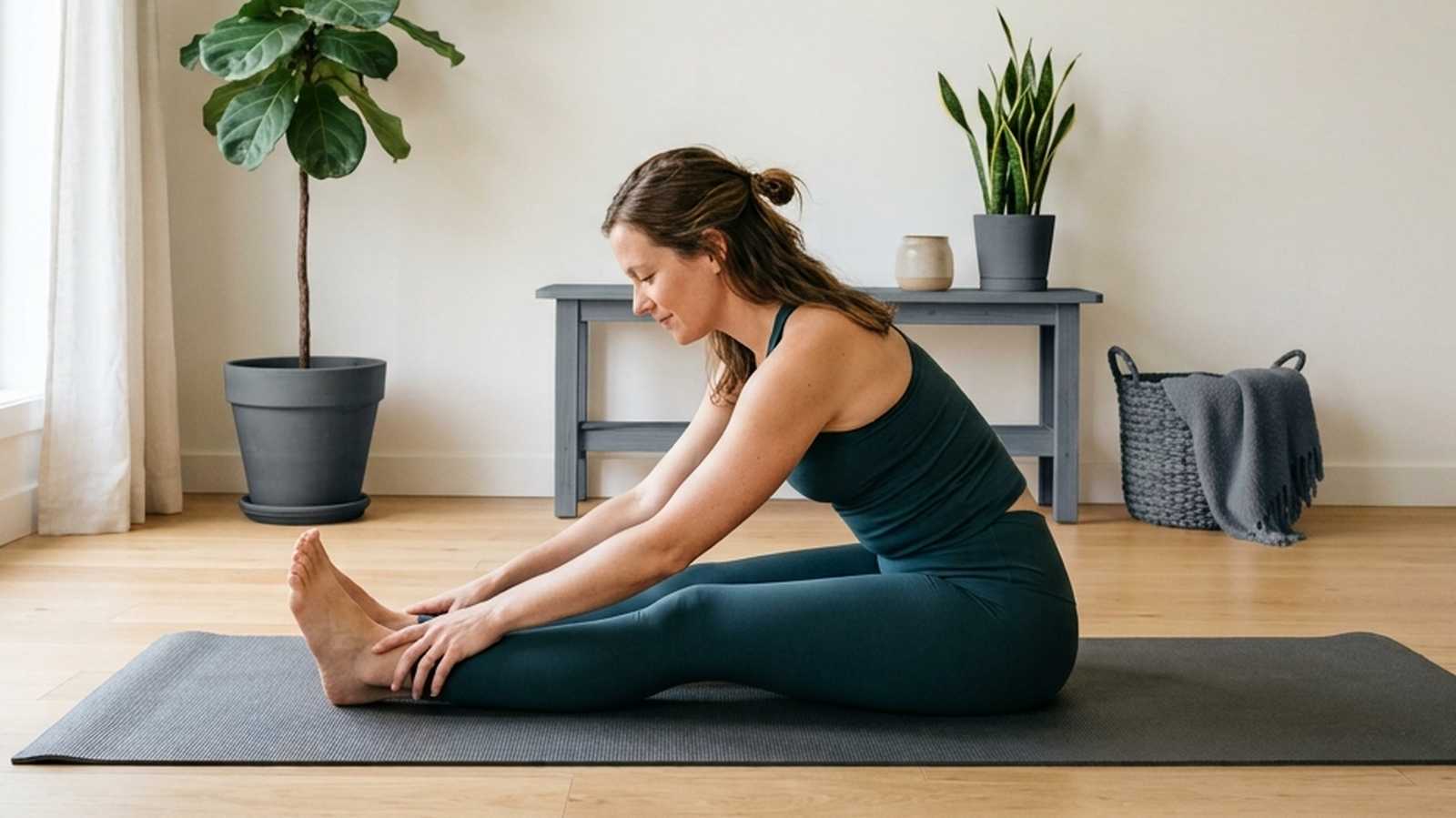
The most freeing thing to learn is that mindfulness doesn't require stillness at all. For a restless body, adding movement usually makes it easier, not less "real."
Walking
Walking is one of the gentlest ways in. You're already moving, which keeps your brain engaged, and a change of scenery gives you natural novelty. Take a slow five-to-ten-minute walk, indoors or out, and sync your attention to the physical sensations: your feet meeting the ground, your weight shifting from leg to leg, the air on your skin, your arms swinging. When your mind wanders — and it will — that's not a failure. Noticing where it went and gently coming back is the exercise. If pure quiet feels too boring, a bit of instrumental music or an audiobook underneath is fine.
Stretching and Gentle Yoga
Stretching pairs movement, breath, and body-sensation, which makes it a natural fit. You don't need a full class — even ten minutes of easy stretching with slow breathing works. Hold a stretch for ten or fifteen seconds and, instead of the vague "just breathe," give your mind a specific job: where's the tension, and what does the release feel like? Breathe into it.
Slower, held styles like yin or restorative yoga tend to suit a busy mind better than fast-paced ones — you're staying in each pose long enough to actually tune into it, without scrambling to keep up with an instructor's pace.
Fidgeting
You have full permission to fidget. Hold a smooth stone, a worry stone, a fidget toy, or even a warm mug of tea, and bring your whole attention to the physical feel of it: warm or cool, smooth or textured, heavy or light. Giving your hands something to do paradoxically frees your mind to settle.
You can also try "fidget breathing" — breathe in as you pick the object up, breathe out as you set it down. The rhythm plus the physical engagement anchors your attention while satisfying the itch to move.
Anchor to Your Senses

A restless mind often engages far better with something outside it than with pure internal focus. So lean on your senses instead of fighting them.
Sound
Silence tends to make racing thoughts louder — a quiet room is an empty space your brain rushes to fill. A steady background gives your attention something neutral to rest on instead. Rain, forest ambience, or brown and pink noise all work well, and this is especially handy in the evening, when a calm soundscape can ease the shift from screens to a body-scan wind-down before bed. Guided recordings work on the same principle — the narrator's voice becomes the thing you keep returning to, which makes drifting off much harder.
Scent
A candle or a little lavender, eucalyptus, or peppermint gives your senses a clear task: notice the smell, and how it changes as you breathe. It's a small, low-effort anchor — and you can stack it onto a habit. Light the same candle every time you practise, and before long your brain links that scent with the pause, which makes dropping into it noticeably easier.
Keep the Doses Tiny
With a busy brain, consistency beats duration every single time. Two minutes a day does more for you than twenty minutes once a week — and a 60-second pause is so small your brain can't really generate resistance to it.
The Minute-by-Minute Approach
Rather than committing to "meditate daily," commit to single-minute pauses at specific moments:
- One minute of mindful breathing after you pour your morning coffee.
- One minute of body awareness while your lunch heats up.
- One minute of noticing your surroundings during a work break.
These are so low-friction there's nothing to dread. And over a few weeks, the tiny doses genuinely add up.
Habit-Stacking
Attach the practice to something you already do, so the existing habit becomes the reminder. After you brush your teeth, two minutes of breathing. After lunch, a three-minute body scan. You're not trying to remember to be mindful — you're just tacking a minute onto something automatic. Those built-in breaks in a Pomodoro session are another ready-made slot: the timer already decides when you start and stop, so you can spend the break on a quick body scan instead of scrolling.
A Body Scan That Actually Works

Body scans suit a busy mind surprisingly well, because they give your attention a clear, moving target instead of the impossible "focus on nothing."
Here's an adapted version:
- Set up. Sit or lie down and set a timer for five minutes. Use a guided audio if silence feels too hard — lying down is completely fine, so there's no pressure to sit "correctly."
- The practice. Bring your attention to your feet and just notice whatever's there — warmth, pressure, tingling — without trying to change anything. After fifteen or twenty seconds, move up to your ankles, then your calves, then your knees, slowly working up your body. At each stop, the question is simply: what do I notice here?
- When you drift. Expected. The moment you realise you've wandered, gently return to whichever part you were on. No self-criticism — that noticing is the skill.
It works because your mind has a concrete, sequential job, it's short enough to actually finish, and you can do it reclined. An evening body scan is especially good if you struggle to switch off at night — more on that in ADHD and sleep.
When You Hit the Usual Snags
A noisy, unpredictable environment
Most mindfulness advice assumes a silent room, which is useless if you live with roommates, kids, pets, or traffic. Rather than chasing perfect quiet, adjust the environment with sound: a white-noise machine, an ambient soundscape, or a personalised frequency mask that dampens the specific noises pulling at you. You're not after silence — you're after a stable, predictable sound floor so your brain isn't spending all its energy filtering distractions.
Racing thoughts the second you start
Do a two-minute brain dump first. Jot down everything swirling around, then begin — your mind settles faster once it trusts the thoughts are saved rather than lost. Or try "noting": instead of clearing your mind, label each thought as it appears ("planning," "worrying"), then return to your anchor. Naming thoughts trains attention better than pretending they won't show up.
Boredom and dropout after a few weeks
Novelty is fuel for a busy brain, so rotate. Walking one week, stretching the next, fidget-and-sound the week after. Switching keeps it fresh — and stale is what quietly ends the habit. An accountability buddy or a group can help too, by adding a little outside motivation.
Start This Week
Don't overhaul your life or chase the "perfect" practice. Commit to one technique for one week:
- Week 1. Pick one — walking, fidget, or body scan — and do two or three minutes a day at the same trigger point.
- Week 2. If it stuck, keep it. If it bored you, switch to a different technique.
- Ongoing. Once one micro-practice is steady, add a second one somewhere else in your day.
Consistency beats duration, and the goal isn't transcendence — it's a small, sustainable tool that helps settle your nervous system, and one piece of a broader ADHD focus toolkit.
The Bottom Line
Mindfulness for a busy brain isn't lotus poses and empty minds. It's brief, doable moments of noticing, built around movement, your senses, and tiny daily doses. If you reframe mindfulness as simply noticing what you're experiencing right now, without judgment, then walking, fidgeting, listening, and scanning your body all count — and you already have everything you need.
Start this week with one technique and one small moment of attention. Let your brain do its restless thing, and notice, without judgment, what happens when you stop trying to meditate "correctly" and start practising in a way that actually fits you.
FAQ
What's the easiest mindfulness exercise for ADHD? Usually a movement- or object-based one, because it gives your body something to do. A short mindful walk, or holding a fidget object while you notice its texture and temperature, is far easier to start with than sitting in silence.
Do you have to sit still to practise mindfulness? No. Walking, stretching, and fidgeting all count. For a restless body, adding gentle movement often makes mindfulness easier, not less effective — the goal is noticing the present moment, not holding a pose.
How long should mindfulness be for ADHD? Short. Start with two to five minutes, and know that consistency matters far more than length — a couple of minutes daily does more than a long session once in a while. Extend only if you want to.
How do I quiet racing thoughts during mindfulness? Do a quick brain dump on paper before you start so your mind knows the thoughts are saved, and use a steady background sound so silence doesn't amplify them. You can also note each thought with a label and gently return to your anchor.
Ready to find your focus?
Steady Station is a distraction-free soundscape and Pomodoro timer built for ADHD minds.
Try Steady Station for free →